Why Heavy Equipment Frames Crack—and How Welding Repairs the Damage
A heavy equipment frame supports the engine, drivetrain, cab, hydraulic systems, attachments, and load while withstanding vibration, torsion, impacts, and weight changes throughout its lifespan. If not properly repaired, cracks can spread; thorough inspection, preparation, alignment, and welding are essential.
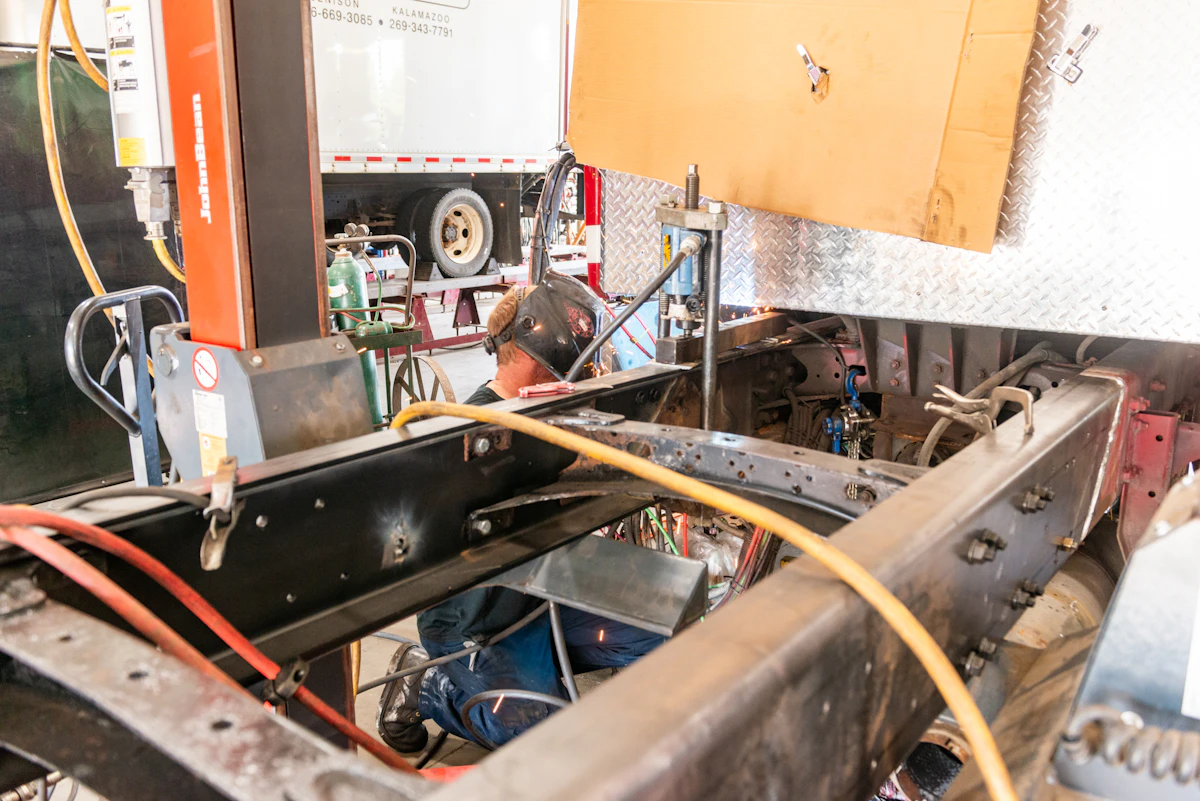
A heavy equipment frame supports the engine, drivetrain, cab, hydraulic components, attachments, and working load. It must withstand vibration, twisting, impact, and repeated changes in weight distribution throughout the machine’s service life. If a crack develops, continued operation can allow the damage to spread to nearby mounting points, crossmembers, and structural members.
Prompt heavy equipment frame repair in Meadville, PA can help prevent a localized defect from becoming a larger structural problem. However, an effective repair requires more than covering the visible crack with weld metal. The damaged area must be inspected, prepared, aligned, welded, and properly evaluated.
Why Heavy Equipment Frames Develop Cracks
Frame cracks typically result from repeated stress, excessive loading, impact damage, corrosion, or an inadequate prior repair. In many cases, multiple factors contribute.
Repeated Loading and Metal Fatigue
Every lifting, digging, pushing, and traveling cycle places stress on the frame. Over time, repeated tensile loading can cause microscopic defects to develop into larger fractures. The Federal Highway Administration explains that fatigue occurs when repeated tensile stress causes microscopic cracks to propagate.
This type of metal fatigue repair is especially important in areas where stress becomes concentrated, including:
- Crossmember connections
- Boom and attachment mounts
- Suspension mounting points
- Engine and transmission mounts
- Articulation joints
- Previously repaired sections
A small crack may grow incrementally each time the machine carries a load or traverses uneven ground.
Overloading and Uneven Weight Distribution
Operating beyond the manufacturer’s rated capacity increases stress on the frame and its supporting components. Even when equipment remains within its rated limit, an improperly balanced load or an incorrectly sized attachment may concentrate force in one area.
Worn bushings, loose mounting hardware, deteriorated suspension components, and distorted crossmembers can also alter how loads are transmitted through the machine. This uneven distribution may contribute to cracks in equipment frames near mounting holes, brackets, and welded joints.
Impact and Torsional Stress
Excavators, loaders, dozers, and forestry equipment regularly operate on uneven or obstructed terrain. A collision with rock, buried debris, curbing, or another machine can bend a structural member or cause a small fracture.
Twisting is another concern. When one side of a machine rises while the other remains lower, the frame experiences torsional stress. Repeated twisting can weaken high-stress areas, especially when existing wear or corrosion has already reduced the metal’s strength.
Corrosion and Material Loss
Water, road salt, mud, chemicals, and trapped debris can gradually thin structural steel. Western Pennsylvania’s wet weather and winter road treatments make corrosion a significant concern for equipment used around Meadville and the surrounding region.
Welding directly over heavily corroded steel does not restore material that has already been lost. Effective structural welding repair may require removing the weakened section and replacing it with properly fitted steel.
Defective Previous Welds
An earlier repair can fail if the crack was not fully removed, the joint received inadequate penetration, or the filler metal was unsuitable. Poor heat control can also introduce residual stress or create conditions that promote further cracking.
Lincoln Electric identifies cracks as particularly serious welding discontinuities. A previous weld should therefore be evaluated as part of the complete structure rather than assumed to be sound.
Warning Signs of Frame Damage
Visible cracking is the clearest sign of structural damage, but other symptoms may appear first. Schedule a weld inspection when you notice:
- Fresh rust lines extending from a weld or a mounting hole
- Broken or repeatedly loosened bolts
- Unusual creaking or popping under load
- Misaligned body panels or attachments
- Uneven tire or track wear
- Distorted brackets or crossmembers
- Hydraulic lines that begin rubbing against the frame
- Cracks beside an older repair
Daily inspections can identify defects before operation begins. Equipment-inspection guidance emphasizes completing and documenting routine machine inspections. Equipment with suspected structural damage should remain out of service until a qualified technician determines whether it can operate safely.
How Welding Repairs Frame Damage
Professional heavy equipment welding follows a controlled process designed to restore structural integrity and reduce the likelihood of recurring failure. Inspection comes first. A technician examines the damaged area for visible cracks, deformation, corrosion, previous weld repairs, and other signs of stress. The inspection also helps determine whether the damage is isolated or whether an underlying problem, such as repeated overloading, misalignment, or excessive vibration, contributed to the failure.
Inspection and Diagnosis
The technician cleans the area to fully expose the crack and surrounding metal. Paint, grease, rust, and debris can hide branching damage. The inspection should also assess alignment, corrosion, nearby fasteners, mounting points, and the operating forces that caused the failure.
The machine’s service information must guide the repair. For example, Caterpillar provides operation, maintenance, parts, and service manuals for its equipment, and other manufacturers publish model-specific procedures and restrictions.
Crack Removal and Joint Preparation
The damaged metal must be prepared so the weld can properly penetrate the joint. This may involve removing the existing weld, opening the crack, removing contaminated material, and correcting distortion before welding begins.
Surface preparation is critical. Oil, moisture, paint, and rust can contaminate the weld and cause defects.
Welding and Heat Control
The correct welding process depends on the base metal, thickness, joint design, equipment manufacturer’s requirements, and repair location. Some materials require preheating to control cooling and reduce the risk of cracking. Preheating can reduce cooling rates, remove moisture, and help limit weld cracking.
Custom heavy equipment fabrication may also be necessary when the original material is severely damaged. Reinforcement plates must distribute stress properly; poorly shaped or incorrectly positioned plates can transfer stress to another section.
Final Inspection
The completed repair should be inspected for visible defects and for proper alignment. Nearby fasteners, brackets, bushings, hoses, and mounts should also be evaluated.
For equipment covered by OSHA crane requirements, repairs to load-sustaining structural components must be inspected by a qualified person before the equipment is returned to service. Even when that specific regulation does not apply, a post-repair inspection remains a prudent safety practice.
Preventing Future Frame Cracks
Preventive maintenance can reduce the risk of recurring damage. Equipment owners should:
- Adhere to the manufacturer's load and attachment limits.
- Inspect high-stress areas regularly.
- Keep the frame clean enough to detect corrosion and cracking.
- Replace worn bushings and loose mounting hardware.
- Investigate repeated failures of bolts, brackets, or welds.
- Schedule an inspection after a collision or overload.
- Record completed repairs to inform future maintenance decisions.
Safe welding also requires controlling fumes, fire hazards, electrical hazards, and nearby combustible materials. OSHA’s welding requirements outline precautions for ventilation, fire prevention, shielding, and work-area control.
Schedule Heavy Equipment Frame Repair in Meadville, PA
Frame cracks should not be treated as cosmetic defects. They often signal fatigue, impact damage, corrosion, excessive loading, or movement elsewhere in the machine. Custead Heavy Truck & Equipment provides construction equipment repair, welding, and fabrication services for equipment owners in Meadville, PA, and the surrounding areas. Contact the shop to schedule an inspection before a small crack becomes a more extensive structural failure.
More Articles
.webp)

.webp)
Contact Us
Have questions or want to schedule your truck or trailer in for service? Get in touch with Custead Heavy Truck & Equipment LLC today, we're open Monday through Friday from 7:30am to 4:00pm & Saturdays from 8:00am to 12:00pm.